Crate Train Your Puppy at Night for a Good Night’s Sleep
Bringing home a new furry friend is exciting, but those first few nights can be challenging for everyone. The quiet darkness of evening creates a very different environment than daytime hours. Your young companion is adjusting to life away from their littermates.
Many new pet parents experience what’s often called the “puppy blues” during this period. It’s completely normal to feel overwhelmed when your sleep is disrupted. Remember that this adjustment phase is temporary with the right approach.
Young dogs need plenty of rest and frequent bathroom breaks. They can become fussy when overtired, just like human infants. With consistency and patience, most pups learn to sleep peacefully through the evening hours by three or four months of age.
This guide will help you create a successful routine for your furry family member. You’ll learn about setting up the perfect sleeping space, establishing calming bedtime habits, and solving common challenges. The goal is security for your pet and restful evenings for your household.
Key Takeaways
- Nighttime crate training presents unique challenges due to the quiet, dark environment
- Feeling overwhelmed during the first few weeks is completely normal for new puppy owners
- Young puppies require frequent potty breaks and can get cranky when overtired
- Consistency and patience are essential for successful nighttime routines
- Most puppies consistently sleep through the night by three to four months of age
- Proper crate training establishes healthy sleep patterns for your entire household
- The process varies for each individual puppy but follows proven strategies
Understanding Nighttime Crate Training
Training your young dog to rest peacefully through the dark hours requires different strategies than daytime methods. The evening environment in your home transforms dramatically from the active daylight period.
What Makes Nighttime Different from Daytime Training
Your puppy experiences the world through different sensory inputs after sunset. The quiet darkness can feel isolating compared to daytime activity. Young animals are accustomed to sleeping near their littermates for warmth and security.
The transition to solitary rest represents a significant adjustment period. Household sounds diminish dramatically, making your pet feel more vulnerable. This isolation sometimes triggers distress vocalizations during the initial adaptation phase.
Responding to every whimper teaches your puppy that noise brings attention. This reinforcement can undermine your daytime progress. However, very young dogs genuinely need bathroom breaks due to limited bladder control.
Consistency between daylight and evening approaches helps your pet understand the crate’s purpose. The space should represent security regardless of the time. Balancing genuine needs with avoiding attention-seeking behavior is essential.
Most pups adapt to nighttime crating within several weeks with proper techniques. Patience during this developmental stage yields long-term benefits for everyone’s rest.
Benefits of Crate Training for Your Puppy
A properly introduced crate becomes more than just a sleeping area—it transforms into your puppy’s personal sanctuary. This secure space satisfies their natural instinct to seek enclosed areas for safety and relaxation.
Why a Secure Space Can Ease Anxiety
Having a designated safe area significantly reduces stress for young dogs. This is especially valuable during the overwhelming early weeks in a new home. Your pet learns to view their crate as a positive retreat rather than confinement.
The house training advantages are equally important. Dogs instinctively avoid soiling their sleeping areas. This natural behavior accelerates the potty training process dramatically.
“A dog’s den instinct is powerful—providing an appropriate space honors this natural behavior while creating household harmony.”
Crate training protects both your puppy and your belongings when unsupervised. It prevents dangerous chewing incidents and household damage. The safety benefits extend throughout your dog’s entire life.
| Benefit Type | Puppy Impact | Owner Advantage |
| Security & Anxiety Reduction | Creates safe den environment | Reduced stress for entire household |
| House Training Support | Encourages natural cleanliness | Faster potty training progress |
| Safety Protection | Prevents hazardous chewing | Preserves household items |
| Lifelong Value | Familiar space for travel/vet visits | Easier management in new environments |
The way you introduce the crate directly impacts your pet’s perception. Positive associations from the start ensure your dog sees their space as a true sanctuary. This foundation makes future vet visits or travel much smoother for everyone involved.
Setting Up the Perfect Puppy Crate Environment
Your puppy’s crate should feel like a secure den, which requires careful consideration of size and materials. The right setup creates a comforting space that encourages peaceful rest.
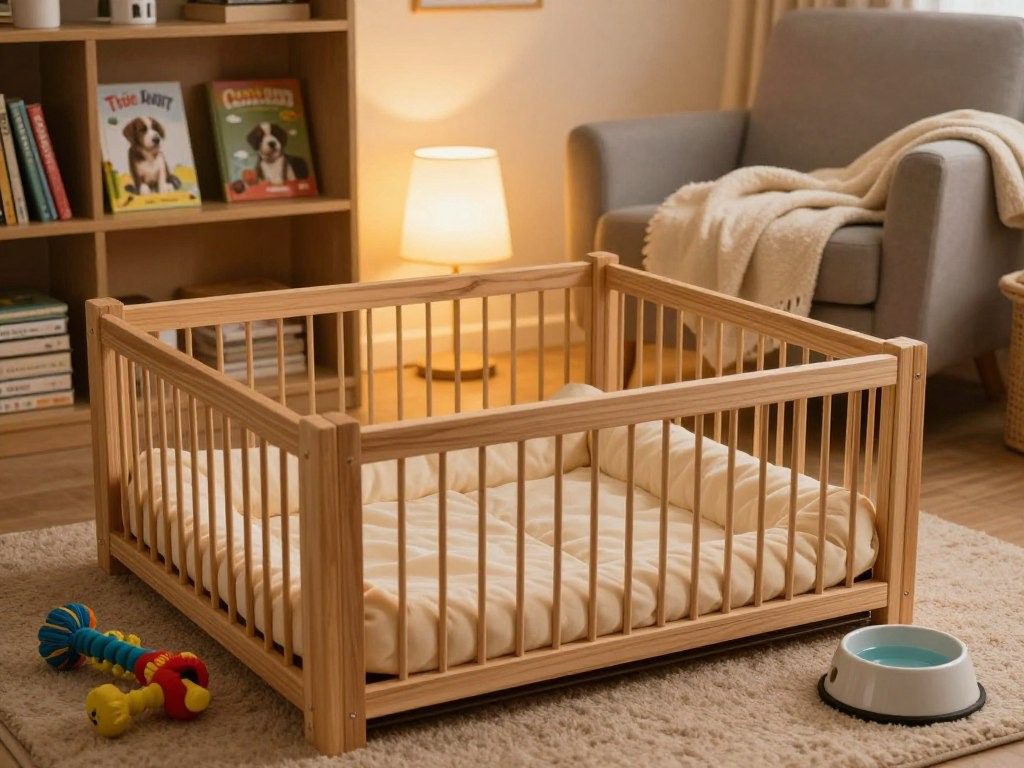
Choosing the Right Dog Crate
Selecting the proper dog crate size is essential. The space should allow your puppy to stand, turn around, and lie down comfortably. Avoid a crate that’s too large, as this can lead to potty accidents.
Wire metal crates offer excellent ventilation for your puppy. Plastic airline-style models provide more darkness and security. Consider using divider panels in an adult-sized crate to adjust the interior area as your puppy grows.
Creating a Cozy Space with Bedding and Toys
Premium bedding creates a comfortable environment inside the crate. Washable vet bedding and wool mats with non-slip backing keep puppies warm. These materials withstand accidents and provide durability.
Safe toys can help your puppy feel secure overnight. Choose soft, non-destructible comfort items without small parts. Avoid anything that could pose choking hazards.
Place the crate near your bedroom initially. This helps you hear your puppy’s needs and provides comfort. Familiar scents like an old t-shirt can make the space more inviting.
How to Crate Train a Puppy at Night (And Get More Sleep)
The key to peaceful evenings lies in establishing predictable patterns that signal bedtime to your young companion. Consistency transforms the crate into a welcome retreat rather than a source of anxiety.
Establishing a Pre-Bedtime Routine
Begin your evening ritual three to four hours before sleep. Feed the final meal early to allow complete digestion. Include quiet activities like gentle chewing on appropriate toys.
Gradually dim lights and reduce household noise. This calm environment helps your furry friend wind down naturally. The sequence should remain identical each evening for maximum effectiveness.
Timing Potty Breaks for Overnight Success
Schedule the final bathroom trip immediately before crating. This ensures an empty bladder and reduces accident risks. Keep this outing calm without play or excited praise.
Younger puppies need more frequent breaks. Set proactive alarms to wake before your companion stirs. This prevents demand barking and encourages longer sleep periods as bladder control improves.
Essential Tips for a Smooth Training Process
The most successful crate training approaches combine patience with practical implementation tips. These strategies help create positive associations with the crate environment.
Proper crate placement is crucial for your puppy’s comfort. Choose a location that offers security while minimizing sleep disruptions. Avoid high-traffic areas but keep the space accessible.
Never rush to close the crate door after your pup enters. Allow voluntary exploration and settling first. This builds trust rather than feelings of entrapment.
Manage evening food and water intake carefully. Restrict access one to two hours before bedtime. This reduces nighttime bathroom needs while maintaining proper hydration.
Tire your puppy out before bed with appropriate exercise. Avoid overstimulation too close to bedtime. Calm activities help with natural winding down.
Create the most comfortable environment possible. Use appropriate bedding and familiar scents. Temperature control also contributes to relaxation.
Avoid common mistakes like using the crate for punishment. Consistency is essential throughout the training process. Gradual progression from short daytime sessions builds confidence.
Patience remains the most valuable element you can bring. Every puppy learns at their own pace. Setbacks are normal but overcome with steady commitment.
Addressing Common Nighttime Challenges
Interpreting your puppy’s nighttime sounds correctly helps you provide the right support without reinforcing unwanted behaviors. Different vocalizations communicate distinct needs requiring specific responses.

Managing Whining, Barking, and Distress
Distress barking indicates genuine anxiety in your young companion. This includes high-pitched howling, continuous whining, and frantic pacing inside the enclosure.
Comfort your pup by sitting near the crate and speaking calmly. Avoid opening the door immediately to prevent teaching that noise earns freedom.
Demand barking is repetitive and attention-seeking. Your puppy looks at you expectantly while vocalizing. Wait for quiet moments before responding.
Bathroom needs often begin with restlessness before vocalizing. Watch for circling, sniffing, or urgent-sounding barks different from attention-seeking noises.
| Vocalization Type | Identifying Signs | Recommended Response |
| Distress Barking | High-pitched, continuous, with pacing | Calm reassurance near crate |
| Demand Barking | Repetitive, anticipatory looking | Wait for quiet before attention |
| Bathroom Needs | Restlessness, circling, urgent tone | Quick outdoor trip then return |
Middle of the night wake-ups require direct bathroom breaks without play. Return your puppy to the crate immediately after elimination.
Pet cameras with night vision help you understand behavior patterns. Consistent responses prevent confusion and accelerate the training process.
Incorporating Exercise and Mental Stimulation
Balancing your puppy’s energy levels throughout the day sets the stage for peaceful nighttime rest. A properly tired companion is much more likely to settle peacefully in their crate when evening arrives.
Strategic timing makes all the difference. Schedule vigorous activities for the afternoon after naps. This prevents your pup from being too well-rested before bedtime approaches.
Wind-Down Activities to Tire Out Your Puppy
Evening hours call for calmer engagement. High-energy games like fetch can overstimulate your puppy. Instead, opt for low-key options that provide mental enrichment.
A “sniffari” walk offers excellent stimulation without excessive excitement. Your puppy explores scents at their own pace. This natural activity tires their brain effectively.
Mental exercise is just as important as physical activity. Puzzle toys and training sessions challenge young minds. These activities help your companion decompress from the day’s excitement.
Gentle chewing on appropriate toys provides natural stress relief. Allow 30-60 minutes of wind-down time before expecting sleep. Watch for signs of overtiredness like excessive fussiness.
Adjusting Feeding and Water Schedules
Managing your puppy’s feeding schedule is one of the most effective ways to prevent overnight accidents. Proper timing reduces the need for middle-of-the-night bathroom trips. This approach supports your overall house training efforts.
Feed your puppy their final meal three to four hours before bedtime. This allows complete digestion and elimination before crating. The digestive timeline ensures waste processing occurs during waking hours.
Water management requires careful attention. Puppies typically need a potty break about ten minutes after drinking. Limit access one to two hours before bedtime to reduce nighttime wake-ups.
Always consult your veterinarian before restricting water. Puppies need free access throughout the day for proper hydration. Medical conditions like diabetes require constant water availability.
Establish consistent feeding times to regulate your puppy’s system. Predictable schedules create reliable bathroom patterns. This consistency accelerates potty training success.
The last person heading to bed should offer a final bathroom opportunity. This quick trip prevents accidents even if your puppy went out recently. Monitor individual patterns to adjust timing for optimal results.
Creating Positive Associations with the Crate
Associating the crate with pleasure and security is the cornerstone of successful overnight training. This emotional foundation determines whether your young companion views their space as confinement or comfort.
Using Treats and Familiar Scents
Place high-value rewards inside the crate to encourage voluntary entry. Special toys that only appear during crate time create excitement. Feeding meals in this space transforms it into a rewarding environment.
Familiar scents provide powerful comfort. An old t-shirt with your smell offers security. Items from the breeder containing mother or littermate scents ease the transition to their new home.
Building Trust Through Consistent Routines
Daytime practice accelerates nighttime acceptance. Short, positive sessions build confidence gradually. Always allow exploration before closing the door.
Never use the crate for punishment. Consistent, gentle introduction creates lasting trust. This patience pays dividends throughout your dog’s life.
Food-stuffed toys like KONGs provide calm enrichment. These activities help your puppy associate the crate with relaxing experiences. The right approach makes the difference between resistance and enthusiasm.
Transitioning from Puppy to Adult Crate Training
As your young companion matures, their nighttime needs evolve significantly from those early puppy days. Most puppies achieve consistent overnight sleep by three to four months of age. This developmental milestone signals readiness for greater independence.
Gradually extend the time between nighttime potty breaks as bladder control improves. Move from every 2-3 hours to eventually sleeping through a full 6-7 hour night. Setbacks are normal during this transition period.
Consider moving the crate from your bedroom to a more permanent location. Choose a central but separate area that promotes balanced routines. This helps your maturing dog develop confidence and self-reliance.
Watch for signs of readiness for more freedom. Consistent dry nights and quick settling indicate preparedness. Some adult dogs may eventually not need confinement overnight.
Even when transitioning away from mandatory crating, many dogs continue choosing their crate as their preferred sleeping spot. The positive associations built during training create lasting comfort.
The skills learned during puppyhood benefit dogs throughout their lives. Travel, vet visits, and safety situations become easier to manage. Maintain the crate as an available option for your adult dog’s security.
Conclusion
Successfully guiding your puppy to sleep soundly is a rewarding achievement. This process relies on a comfortable setup, a predictable schedule, and consistent, gentle encouragement.
Remember, every young dog learns at their own pace. Comparing your progress to others can create stress. Patience and consistency are far more important than perfection. Minor setbacks are a normal part of the training journey.
The initial challenges are temporary. Most pups sleep reliably through the night within a few months. Celebrate small victories along the way.
This effort builds a strong bond and establishes healthy habits for life in your home. The peaceful nights ahead make the initial work incredibly worthwhile.
FAQ
What is the best age to start crate training a puppy at night?
You can begin the training process as soon as you bring your puppy home, typically around 8 weeks of age. Starting early helps establish good habits and makes the adjustment to their new home easier. Consistency is key from day one.
How long can a puppy stay in a crate overnight without a potty break?
A general rule is that a young puppy can hold their bladder for about one hour per month of age. For example, an 8-week-old pup may need a bathroom break every 2-3 hours. You will gradually extend this time as your dog matures.
My puppy whines in the crate at night. What should I do?
First, ensure their basic needs are met—they might need a potty break. If they are just protesting, avoid letting them out while they are crying, as this rewards the behavior. Instead, wait for a moment of quiet before offering reassurance or a quick trip outside.
Should I put water in my puppy’s crate overnight?
It’s generally best to remove the water bowl about two hours before bedtime. This helps manage their need for a bathroom break during the night. Always provide fresh water throughout the day and after any middle-of-the-night potty trips.
What type of dog crate is best for nighttime training?
A wire crate with a divider panel is often ideal. It allows for airflow, lets your puppy see their surroundings, and can be adjusted in size as your pup grows. This helps create a secure, den-like space that isn’t too large.
How can I make the crate a positive space for my puppy?
Use high-value treats, safe chew toys, and familiar blankets to build positive associations. Feed meals inside the dog crate and keep the door open during the day for naps. This helps your pet view it as their own safe bed, not a punishment.
When can I stop using the crate at night?
You can consider phasing out the crate once your dog is fully house trained, reliably sleeps through the night, and doesn’t exhibit destructive behaviors. This transition often happens when they reach adult maturity, but every pet is different.