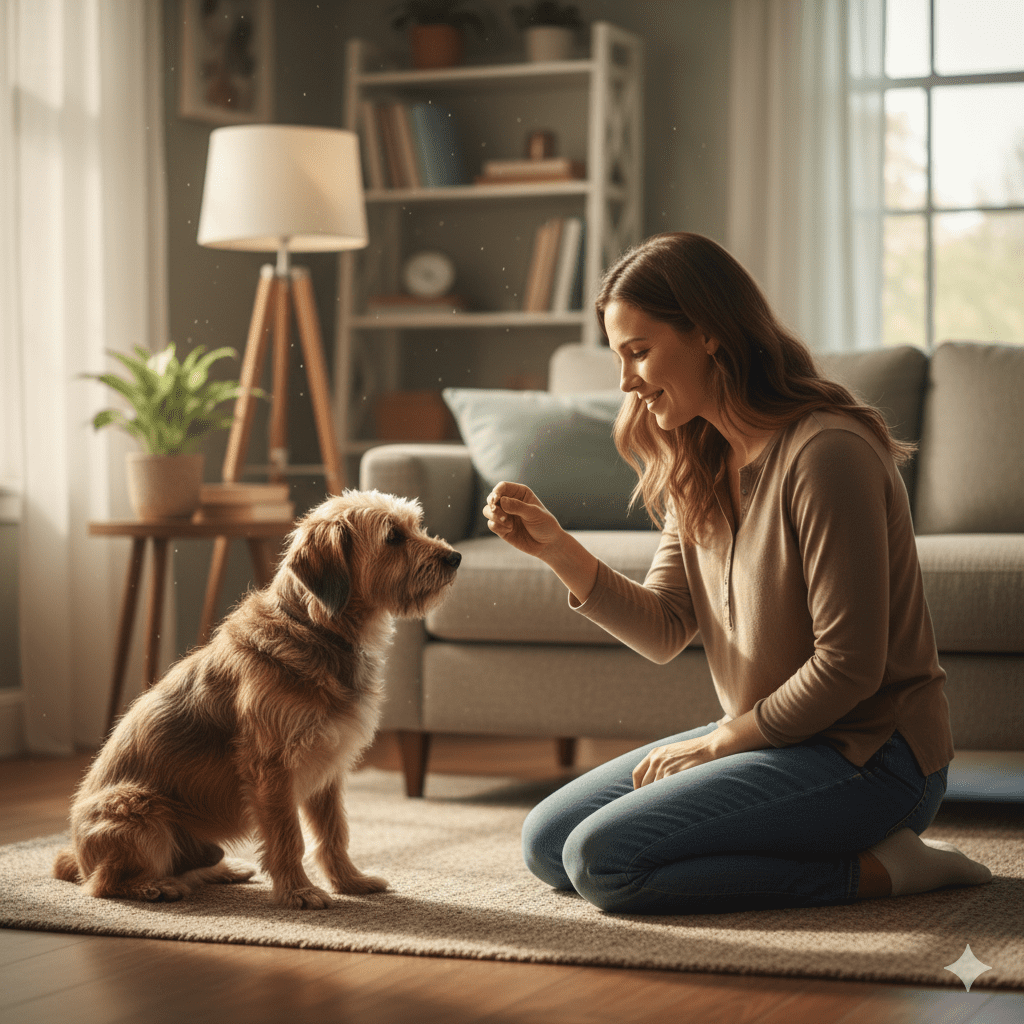
You just brought a rescue dog into your home. That first night can feel heavy for both of you. Adoption is one of the most stressful events a dog may face, and the relationship you seek rarely forms overnight.
Start by focusing on safety and predictability. Set clear routines, offer gentle handling, and choose rewards that help your dog feel secure. Trust grows from simple, repeated signals that say “this place is safe.”
This short guide shows a clear roadmap: prepare the home, allow decompression time, use trust-first training, keep sessions brief and positive, and learn when to seek professional help. Success looks like small wins — eating, resting, choosing to approach, calmer walks — not instant obedience.
You are your dog’s steady advocate. Move slowly, respect choice, and celebrate each small step as the real measure of progress.

Key Takeaways
- Bonding takes months; expect gradual progress.
- Prioritize safety, routines, and clear communication first.
- Short, positive sessions build trust faster than pressure.
- Small, measurable wins matter more than instant obedience.
- You are the advocate: offer choice, calm, and consistency.
Prepare Your Home and Environment So Your Rescue Dog Can Feel Safe
Start by arranging the home so your new companion has clear, safe places to rest and observe. A predictable environment lowers stress and speeds learning.
Create a den area using a crate, bed, or exercise pen placed where the dog can watch family life without being in the main traffic path.
Make the den work
Respect that space. When your dog uses the den, do not reach in, grab collars, or let children or other pets bother them. This rule teaches safety and choice.
Dog-proof and zone your rooms
- Remove chemicals, cords, medications, and toxic plants.
- Secure trash and small items; consider baby gates for supervision.
- Designate one sleep area, one feeding spot, and one quiet decompression area.
Stock essentials
Provide a cozy bed or blanket, bowls, food and water, leash, ID, cleaning supplies, enrichment toys, and safe chews.
| Item | Purpose | Placement |
| Crate/Bed | Safe retreat for rest | Quiet spot near family, not in traffic |
| Toys & Chews | Reduce stress chewing, offer enrichment | Available in den and play zones |
| Food & Bowls | Consistent feeding reduces anxiety | Single feeding station |
| Cleaning + ID | Prepare for accidents and safety | Accessible storage near main areas |
Match the setup to any routine your adult rescue prefers when possible. A clear, consistent space leads to calmer behavior and faster progress in house manners.
Help Your Rescue Dog Decompress During the First Days in a New Home
The first days set the tone for your dog’s adjustment and deserve a calm, patient plan. Decompression means giving time and quiet so your companion can process a big change. Prioritize calm, choice, and safety over social pressure.

Let your dog settle at their own pace
Consent-based interaction matters: wait for your dog to approach, keep hands low, and give short 3–4 second chest or shoulder strokes only when they re-initiate contact. This builds trust and reduces anxiety.
Keep the household calm
Limit visitors for the first few days. Ask family and people in your home to move quietly and avoid sudden reaches. Introduce other pets slowly and strategically.
Short walks and a simple routine
Start with short, familiar walks in the same area so your dog can map the neighborhood without overwhelm. Create a clear routine for meals, potty breaks, quiet time, and brief walks—consistency lowers anxiety.
Track progress and manage nights
Keep a settling-in diary for triggers, appetite, sleep, and small wins for the first three months. For nights, place a warm bed in a low-noise spot; sleep nearby if separation panic occurs, then fade distance gradually. Setbacks are normal—use them as information and slow the pace when needed.
How to Train a Rescue Dog with Trust-Building Tips
Create simple, repeatable patterns in your home that signal safety and consistency for your dog.
Define trust as predictable patterns: offer the same cues, the same boundaries, and calm responses so your rescue can predict what happens next. Reliability matters more than intensity; steady actions build a stronger bond.
Use calm body language: move slowly, keep a soft posture, and use a steady voice. These signals lower stress and help dogs read your intent without confusion.
Be an advocate: step between your dog and overwhelming people or crowded sidewalks. Say “don’t touch” and create space when needed so your companion learns you manage tricky things.
Comforting fear is not the same as rewarding a behavior. Gentle reassurance helps emotions settle and speeds recovery. You can soothe without encouraging risky reactions.
Interactive feeding and enrichment
Don’t free-feed. Offer meals 2–3 times daily and use some kibble for short training or enrichment. Try puzzle feeders, stuffed Kongs, and scatter feeds in a safe zone.
Pick up leftovers after about 15 minutes so food stays special. These choices turn feeding into a predictable, positive part of training and improve voluntary check-ins, lower startle responses, and increase willingness to engage.
Run Training Sessions That Strengthen Your Bond and Improve Behavior
Use brief, consistent sessions to teach cues and build confident choices. Keep each block to 5–10 minutes in a low-distraction space. This protects confidence and makes learning predictable.
Use positive reinforcement: reward what you want with timely treats or praise. Timing matters—deliver the treat immediately so the dog links action and reward. Avoid punishment; it harms trust and can worsen fearful behavior.
Practical session structure
Set one clear goal per session, gather high-value treats, and remove distractions. If your dog struggles, drop the difficulty and reward a simple behavior so you end on a win.
Foundational cues and play
Teach come, sit, down, and a reliable go-to place on a mat or bed. A practiced place gives you an off-switch during meals, guests, or TV time.
Mix short play breaks—tug, fetch, or a toy—between reps. Your focused attention is a powerful tool; when you are present and patient, learning speeds up. Adult rescues can progress quickly, but match pace to emotional safety and step back when needed.
Work Through Common Rescue Dog Behavior Challenges with Patience and a Plan
Rescue dogs often show coping behaviors; reading those signals helps you plan the next safe step.
Recognize common stress signs: fear of people or places, barking or whining, chewing and destruction, resource guarding, growling, and house soiling. These are strategies your dog uses when nervous—not moral failings.
Respect “no” and gather data
When your dog says no, that is information. Note who, what, where, distance, and time of day. Lower the difficulty, change the environment, and offer a smaller step so confidence can rebuild.
Manage resources and prevent conflict
Trade up instead of grabbing. Offer a higher-value treat for toys or food and practice clear cues like “drop” and “give.” Avoid reaching into the mouth or bedding; trading reduces rehearsals of guarding.
Use management and seek help when needed
Limit rehearsals with baby gates, indoor leashes, chew stations, and set routines that reduce chaos. If your dog shows unpredictable aggression, severe anxiety, or won’t settle, get a qualified trainer or veterinary behaviorist early.
Bring your diary of triggers and wins to professionals. Patience plus a clear plan protects your life together and speeds safer progress.
Conclusion
, Finish each day knowing small, steady steps build the relationship you want. Set up a safe space, allow quiet decompression, and use clear, predictable routines that show you are reliable.
Protect your dog’s space and reward the actions you want. Keep sessions brief and fun, add enrichment and play, and step back when your companion says no. Consistency is the fastest way to grow trust and a lasting bond.
Use walks as shared time for sniffing and calm exploration rather than a rushed chore. This simple practice makes training part of life, not just drills.
Pick one routine this week—meal times, bedtime, or a short daily session—and track progress in a diary. That steady way forward helps your rescue feel safe and engaged over time.
FAQ
How long will it take for your rescue dog to feel safe in a new home?
Adjustment varies by background and temperament. Many dogs begin to relax within days, but some need weeks or months. Create a calm routine, provide a quiet den area, and keep interactions low-key. Track progress with a settling-in diary and celebrate small wins to build confidence over time.
What should you include in a den area and where should it be placed?
Include a sturdy crate or exercise pen, a comfortable bed, familiar-smelling blankets, and safe chews. Place the den in a quiet part of the house that still lets your dog see family activity without being overwhelmed. Respect that space and allow your dog to enter on their own schedule.
How do you introduce children and visitors without overwhelming your new dog?
Limit early visitors and brief interactions. Teach children to approach calmly, at the dog’s level, and to avoid sudden movements. Offer treats for calm behavior and use a barrier or crate if your dog needs distance. Gradually increase exposure as trust grows.
What are effective ways to reduce anxiety during walks and outings?
Start with short, predictable walks in familiar areas. Use a secure harness, keep a relaxed pace, and reward calm focus with treats or food enrichment. Avoid busy routes at first and gradually introduce more stimulating environments as your dog shows comfort.
Can you reassure a fearful dog without “reinforcing” the fear?
Yes. Offer calm, confident reassurance—soft voice, gentle petting if welcomed, and high-value treats for relaxed behavior. Focus on changing the emotional response through gradual exposure and positive associations rather than punishing or forcing interactions.
How should you structure short training sessions for best results?
Keep sessions to 5–10 minutes, multiple times a day. Use high-value treats, clear cues, and end on a successful note. Consistency, timing, and predictable rewards build understanding and strengthen your bond without creating stress.
Which foundational cues are most useful for safety and cooperation?
Prioritize come, sit, down, and place. These cues support control during walks, visits, and shared activities. Teach them with positive reinforcement, gradually add real-world distractions, and reinforce cues regularly to maintain reliability.
How do you handle resource guarding or possessive behavior safely?
Use trading techniques: offer a higher-value treat in exchange for the guarded item, then reward and remove the object briefly. Avoid forcibly taking items. If guarding persists or escalates, consult a certified trainer or veterinary behaviorist for a tailored plan.
When should you consider professional help for anxiety or unpredictable behavior?
Seek a certified trainer or veterinary behaviorist if your dog shows escalating aggression, severe fear responses, or if you feel unsafe. Early intervention speeds progress and prevents long-term problems. Look for credentialed professionals from IAABC or the Certification Council for Professional Dog Trainers.
What role does enrichment play in building trust at home?
Enrichment creates positive associations and reduces stress. Use food puzzle toys, scatter feeding, interactive games, and scent work to engage your dog’s mind. These activities improve welfare and make training more effective by strengthening the bond.
How can you help your dog feel secure at night without creating dependence?
Provide a comfortable bed or crate near family activity at first, then gradually increase distance as confidence builds. Use a consistent bedtime routine, low-level comforting cues, and avoid reinforcing attention-seeking behaviors. Patience and steady steps encourage independence.
What supplies are essential for training and daily care?
Keep high-value treats, a secure leash and harness, a crate or pen, durable toys, chews, food and water bowls, and cleaning supplies on hand. These essentials support consistent routines and help you respond promptly during training sessions.
How do you manage setbacks or slow progress during training?
Treat setbacks as information, not failure. Reduce difficulty, return to established cues, and reinforce small successes. Adjust your environment, timing, or rewards. If progress stalls, consult a professional for fresh strategies and support.
What daily routine elements help strengthen your bond?
Consistent feeding times, scheduled walks, short training sessions, play, and calm downtime build predictability. Regular attention and shared activities create trust and make your dog feel secure in family life.