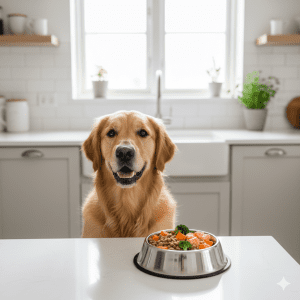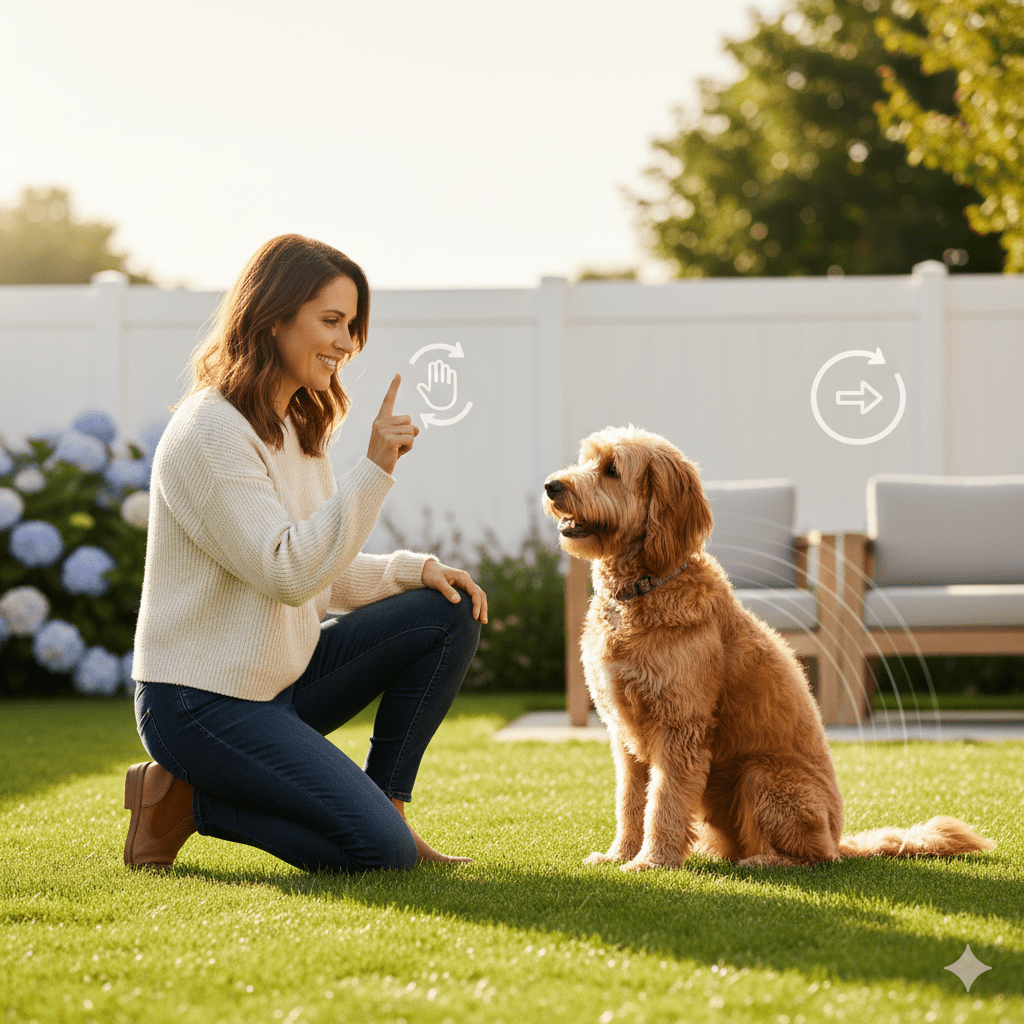
This introduction lays out a simple plan you can follow for reliable home manners and safer walks. The core cues — sit, stay, come — form the foundation of everyday obedience and help you keep control in busy spots like doorways, sidewalks, and kitchens.
Short, positive sessions work best. Keep practice to about 5–10 minutes, end on a win, and build trust with rewards. This approach helps shape good behavior without fear or confusion.
You can use the same framework with puppies and adult dogs. Adjust rewards, session length, and difficulty for age and temperament. Results come with consistency and patience, measured over weeks rather than minutes.

The article ahead breaks the process into clear steps: session setup, teaching sit, then stay, then come, and practical troubleshooting. The goal is reliable everyday skills, not perfection in competition.
Key Takeaways
- Core cues create safety and better control in daily life.
- Short, reward-based sessions build trust and faster learning.
- Work in small steps and stay consistent over weeks.
- The same framework fits puppies and adults with tweaks.
- Focus on reliable behavior, not flawless performance.
Why basic commands matter for safety, control, and better behavior
A small set of reliable cues can change daily behavior and make outings safer and calmer. These core skills give you a clear way to manage impulse decisions and guide good manners in real situations.
How these cues build impulse control and everyday obedience
Sit creates a default pause that cuts jumping and darting. Ask for a seat before feeding, opening doors, or greeting people and you reduce chaotic moments.
Stay trained self-control by holding a position until you release the dog. That steadiness prevents rushing into hazards and supports calm thinking.
Recall (come) works as a safety net. When distractions appear, a reliable return keeps your dog away from danger and within your control.

When these cues help most in real-life situations
- At home: ask for a seat before clipping a leash, use stay while you clean broken glass, call come from spilled food.
- On walks: sit at curbs, stay while you pick up waste, call come to avoid unwanted greetings with people or other dogs.
- Around people: these cues reduce pulling, bolting, and overexcitement so interactions stay calm and safe.
| Command | Primary benefit | Common situation |
| Default pause | Reduces jumping and door rushing | Before open doors, meals, or guests arrive |
| Hold position | Builds self-control and calm choices | While you handle hazards or tie shoes |
| Reliable recall | Safety from distractions and hazards | When food drops or other animals approach |
These basics not only improve present behavior but also speed learning for later skills. Once impulse control is in place, new lessons follow faster and with less confusion.
Set up your dog training sessions for success with positive reinforcement
Start sessions in a low-distraction room where your timing and rewards are most effective. A clear space helps you shape behavior without surprises.
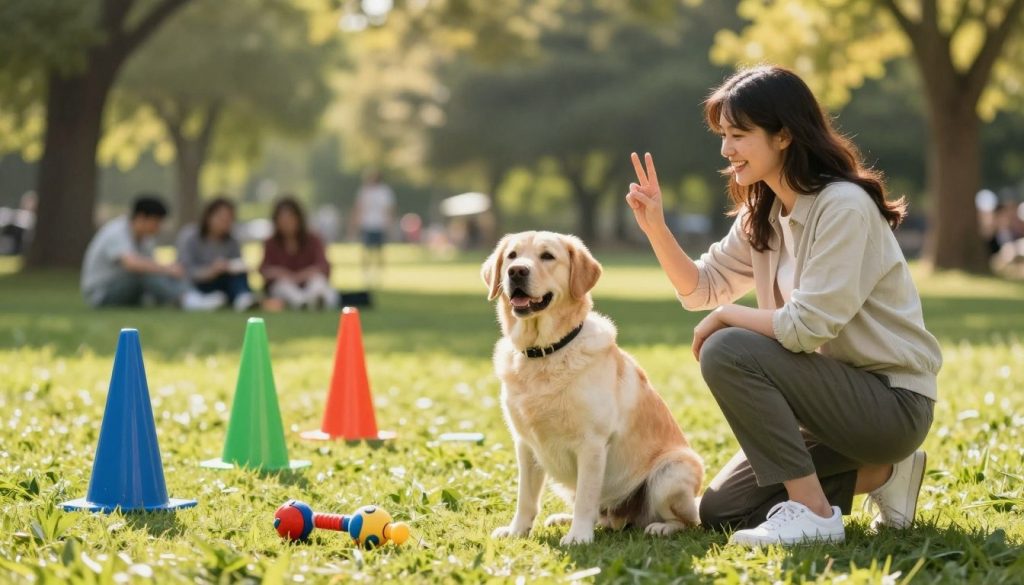
Choose a quiet space and remove distractions
Begin indoors in a small room so sounds and scents do not pull focus. Once the process is steady, move gradually to busier areas.
Pick rewards your dog values
Use small high-value treats for new steps and kibble for easy repetitions. Mix in praise and brief play so food is not the only motivator.
Keep sessions short and upbeat
Work in 5–10 minutes blocks. Stop while your dog is still engaged and end on a win to protect progress and motivation.
- Format: brief reps, frequent breaks, clear cues.
- Voice: stay calm and consistent so commands stand out from chatter.
- If learning stalls: reduce distractions, shorten the session, lower criteria, or upgrade the treat value rather than raising your voice.
Patience is part of the process—small gains each session add up. Keep practice regular and the training will become reliable over time.
Teach the sit command using simple, dog-friendly techniques
Begin with a gentle, clear step that rewards the exact moment your dog sits without prompting. This capturing method builds the behavior by reinforcing what your pet already offers.
Capture a natural sit
Stand in front of your dog and wait. The instant the rear lowers, mark the moment with a click or word and give a quick reward.
Reset between reps by stepping to the side or back so the dog stands again. That creates fresh chances to capture a clean site.
Lure then fade the food
Hold a small treat at the nose and lift it slowly over the head so the front of the body follows and the rear drops. Reward immediately when the position appears.
After a few reps, switch to an empty hand signal while still delivering the treat from your other hand. This fades reliance on the hold treat while keeping success high.
Add a word and a consistent hand cue
Say the training word once the motion predicts the result, then give the hand signal. Use the same hand shape each time so the cue stays clear even in noisy spots.
| Step | Action | Why it works |
| Capture | Wait at the front, mark, reward | Reinforces natural behavior without pressure |
| Lure | Hold treat at nose, lift over head | Creates the sit through head movement |
| Fade | Use empty hand, reward from other hand | Reduces food dependency while keeping rewards |
| Cue | Add a word then hand signal | Speeds recognition and works in distractions |
Avoid pushing the rear into position. Physical forcing can create stress and slow the learning process. Keep steps small, predictable, and positive.
How to Teach Your Dog Basic Commands: Sit, Stay, Come
Start with a clear roadmap that links one cue to the next so each skill builds on what came before.
Big picture: begin with the pause cue, then teach holding position, then build a reliable return. That order gives structure and reduces confusion as you layer difficulty.
Use the same training loop for each command: set up the environment, give a single clear cue, guide or help the behavior, reward immediately, then reset and repeat. Short, frequent sessions keep focus high and learning steady.
Make sure the dog masters each step before adding time, distance, or distractions. Reliable means your dog responds the first time in everyday situations—not only in a quiet room.
Practice in several locations so cues generalize across places. If progress stalls, adjust one variable: the environment, the reward value, or the criteria. Patience, not pressure, wins results.
| Stage | Focus | Goal |
| Step 1 | Pause cue | Short, consistent sits before openings or greetings |
| Step 2 | Hold position | Build seconds of self-control and add distance later |
| Step 3 | Reliable recall | Return first time in common environments |
Train the stay command with duration first, then distance
Focus first on time: have your pet hold a position for a few seconds and reward that success. Start sessions in a quiet space and begin from a reliable site so you can judge success clearly.
Build seconds before steps back
Ask for a seat, wait a few seconds, then mark and give a reward. Repeat while you gradually increase the delay by about 3–5 seconds until your dog holds roughly 15 seconds.
Introduce a release cue
Pick a release word or simple hand signal such as “OK” or a flat palm. Practice the release so the dog learns the hold ends only when you say the word or show the signal.
Add distance one step at a time
Take one step back, return, reward, and release. Slowly increase distance while protecting the position. If the dog breaks, back up to an easier step and rebuild.
Practice daily for 15–30 minutes with patience. Keep reps short, avoid unsafe locations, and never leave a dog unattended for long holds.
Teach come when called so your dog returns to you reliably
Build recall by making returning a clear, rewarding choice every time your pet turns back toward you.
Begin indoors in a quiet room. Say your chosen word once, then mark and give a treat immediately. Early reps are about conditioning the cue, so your dog doesn’t have to perform fast at first.
Make recall a game
Add movement and play: take a quick step away, use an upbeat voice, then call and reward the moment your dog orients to you. Toss a treat, call as they finish, and reward the turn so checking in becomes fun.
Progress safely outdoors
Use a long leash in an enclosed area to practice distance in controlled steps. If your dog ignores the cue, reduce the distance, raise treat value, and set up an easy win rather than repeating the command multiple times.
Protect trust at arrival
When they reach you, kneel calmly and offer treats rather than grabbing or startling. Praise and gentle handling make recall a positive habit that improves everyday behavior with people and distractions.
“A warm welcome and a tasty reward build a recall your dog will choose again and again.”
Common training mistakes to avoid and how to fix setbacks
A few common mistakes derail otherwise steady learning. Spotting those early keeps the process moving and reduces stress for both of you.
Why punishment and harsh corrections hurt progress
Avoid yelling or leash corrections. These tactics raise anxiety and blur cues. Fear slows learning and makes reliable behavior rare.
When the position breaks or the cue is ignored
If the animal rises, the step is too hard. Shorten duration, cut distance, or lower distractions. If they ignore a word, stop repeating it and rebuild success in an easier setup.
Adjusting pace, rewards, and settings
Return to small steps, increase reward value for harder reps, and move back to quieter situations before testing in real life. Pause when frustration appears and try a short session later.
| Problem | Likely cause | Quick fix |
| Breaks position | Criteria too high | Lower duration or distance |
| Ignores cue | Cue diluted by repeats | Reset setup; reward clear responses |
| Stressful reactions | Punishment or loud voice | Use calm praise and short wins |
Patience is an active tool: plan short reps, celebrate small gains, and rebuild gradually.
Conclusion
Small wins repeated over weeks turn simple cues into reliable behavior in real situations. The trio of sit, stay, and come work together to boost everyday obedience, safety, and control when you practice often and calmly.
Keep sessions short—about 5–10 minutes—and end while success is high. Consistency over intensity builds lasting progress. Use high-value treats early so the reward stays meaningful and your pet chooses the cue again.
Follow the progression: teach a clear sit, add duration then distance for stay with a release word, and build recall indoors before moving outside. Practice during normal routines and walks so skills transfer to real life.
Practical next step: pick one command and spend a few minutes of reps today. Stop while success is strong and keep the momentum going.
FAQ
What’s the quickest way to get a reliable seat?
Capture the moment your dog naturally drops into a seat and rewards immediately. Use a food lure if needed: hold a treat near the nose, move it up and back so the head follows and the rear lowers. Say a short cue word as the sit happens and add a clear hand signal. Keep sessions short—5 to 10 minutes—and repeat several times a day.
How do you build a longer stay without confusion?
Start with a solid seat first. Ask for a brief stay (2–3 seconds), reward, and use a distinct release word like “free.” Gradually increase delay, then add distance one step at a time. If your dog breaks, reset to a shorter hold and reward success. Practice daily, slowly increasing difficulty.
What’s the best way to teach a reliable recall?
Begin indoors with high-value rewards and a happy tone. Pair the cue with immediate rewards so the word means something good. Make recall a game—run away from your dog, call enthusiastically, and reward when they arrive. Use a long leash outdoors for safety while increasing distance and distractions.
How often should you train each cue?
Short, frequent sessions work best. Aim for several 5–10 minute sessions per day rather than one long practice. Frequent repetition with high-value rewards helps retention and keeps momentum without fatiguing your dog.
When should you use treats versus praise or play?
Use treats early to shape new behaviors, then switch to intermittent food rewards while adding praise and play. Choose rewards your dog values—small soft treats, a favorite toy, or enthusiastic petting—and vary them to maintain motivation.
How do you add distance to a stay without the dog breaking?
Add distance gradually. Step back one step at a time, return quickly to reward the correct stay, and then increase steps. If the dog breaks, reduce distance and slowly rebuild. Consistency and small progressions prevent confusion and strengthen control.
What should you do if your dog ignores the cue because of distractions?
Move back to a lower-distraction environment and succeed at an easier level. Increase reward value, reduce distance, and practice short reliable repetitions. Gradually reintroduce distractions as the dog proves reliable.
Is a leash necessary for teaching recall outdoors?
Yes. A long line gives freedom while keeping your dog safe and under control. It lets you practice distance and distractions without risking escape. As reliability increases, you can test off-leash in fully secure areas.
How do you teach a release signal so your dog knows when movement is allowed?
Choose a clear release word like “free” or “okay.” Say it once, then reward the dog for moving. Always use the same word or hand signal and never release from a stay by giving mixed cues like treats or inviting motion without the release word.
What common mistakes slow progress and how do you fix them?
Common errors include inconsistent cues, rewarding failure, using punishment, and training too long. Fix them by standardizing words and hand signals, rewarding only correct responses, avoiding yelling or harsh corrections, and keeping sessions brief and positive.
How long until these cues become dependable in daily life?
It varies by dog, but many dogs show solid progress in 2–6 weeks with consistent daily practice. Reliability in distracting real-world situations often takes longer. Patience, short sessions, and steady increases in difficulty will get you there.
Can older dogs learn these skills as easily as puppies?
Yes. Mature dogs can learn quickly, often faster than puppies because they focus better. Use the same positive reinforcement approach, adjust session length to the dog’s energy, and be patient with any ingrained habits.
How should you react when the dog rushes you instead of returning calmly?
Avoid punishing or grabbing. Turn away and ignore the dog briefly, then call again with a higher-value reward or play. Teach an alternate greeting behavior, like a sit at the front, and reward calm arrivals to reinforce polite returns.
Are hand signals important or is voice enough?
Hand signals are valuable because they work at a distance and when voices may be hard to hear. Pair a consistent signal with the verbal cue during early training, then rely on either or both depending on the situation.
What reward timing works best for reinforcing correct behavior?
Reward within one second of the correct behavior. Quick, precise rewards help your dog make the connection between action and consequence. Use a marker like a clicker or a sharp vocal “yes” if that helps you time rewards accurately.